This is default featured post 1 title

Go to Blogger edit html and find these sentences.Now replace these sentences with your own descriptions.

This is default featured post 2 title

Go to Blogger edit html and find these sentences.Now replace these sentences with your own descriptions.

This is default featured post 3 title

Go to Blogger edit html and find these sentences.Now replace these sentences with your own descriptions.

This is default featured post 4 title

Go to Blogger edit html and find these sentences.Now replace these sentences with your own descriptions.

This is default featured post 5 title

Go to Blogger edit html and find these sentences.Now replace these sentences with your own descriptions.

Showing posts with label Economic. Show all posts

Tuesday, 24 May 2011

Advances in the Economics of Information Systems


Advances in the Economics of Information Systems
English | PDF Format | 260 pages | 978-1591404446 | Idea Group Publishing (March 22, 2005) | 3.10 MB


Book Description
Advances in the Economics of Information Systems provides a wide perspective on the issues related to applications of economics to information systems area. From grid computing to online auctions, the reader can find novel uses of economics tools in understanding concepts related to the use of technology at the firm level. IT professionals will also find rich analysis of problems at their agenda and benefit from the insights this reference field provides.


Download:
http://www.ftp2share.com/file/38587/Advances in the Economics of Information Systems.html

High Speed Download

Sunday, 22 May 2011

OECD Economic Outlook, Volume 2010 Issue 1 - Preliminary version


This issue contains three special chapters.

Prospects for growth and imbalances beyond the short-term
Many countries will have to face up to severe macroeconomic imbalances during the recovery period and beyond.
What will be the effects of necessary fiscal consolidation?
How can policies contribute to a strong, sustainable and balanced global economy?
How do policy requirements differ across OECD and non-OECD countries?

Return to work after the crisis
The recent recession had a highly differentiated impact on labour markets across the OECD.
Why has unemployment risen so much in some countries and so little in others?
Is there a risk of a jobless recovery and high unemployment rates becoming locked in?
What can be done to get people back into work?

Counter-cyclical economic policy
The effects of the recent economic crisis have stretched policy frameworks in many OECD countries to breaking point.
How can policy settings be strengthened?
What lessons have been learnt? What policies would allow economies to withstand large adverse shocks?
How is the development of large imbalances and asset price misalignments best avoided?


Table of Contents

CHAPTER 1 GENERAL ASSESSMENT OF THE MACROECONOMIC SITUATION
CHAPTER 2 DEVELOPMENTS IN INDIVIDUAL MEMBER COUNTRIES
CHAPTER 3 DEVELOPMENTS IN SELECTED NON-MEMBER ECONOMIES
CHAPTER 4 PROSPECTS FOR GROWTH AND IMBALANCES BEYOND THE SHORT TERM
CHAPTER 5 RETURN TO WORK AFTER THE CRISIS
CHAPTER 6 COUNTER-CYCLICAL ECONOMIC POLICY


Fr.ed. - Perspectives économiques de l'OCDE, Volume 2010 Numéro 1

fr ES Download • | • fr iFi Mirror


More:

Information Technology Outlook
IT ES Download • | • IT iFi Mirror


You find here


High Speed Download

Foreign Aid, War, and Economic Development: South Vietnam, 1955-1975


Douglas C. Dacy, "Foreign Aid, War, and Economic Development: South Vietnam, 1955-1975"
Cambridge University Press | ISBN: 0521021316 | October 20, 2005 | 324 pages | PDF | 6.9 MB
Foreign Aid, War, and Economic Development traces the economic history of South Vietnam from 1955 to 1975. During this period encompassing the Vietnam war, high-level officials paid relatively little attention to the economy of South Vietnam even though economic development was a necessary condition for the country's survival. A generous foreign aid program was designed to pay local troops and improve the standard of living of the population. Professor Dacy documents this growth in national income and the progress or lack thereof in a number of development indicators. He discusses the goals of United States economic aid and measures the net resources transferred. Additionally, the book analyzes wartime inflation and the Vietnamese tax system, and in so doing shows that the measures which would have promoted long-run viability were shunned in favor of short-run expediencies that practically doomed the country in the long run. Finally, economic development in South Vietnam is compared to that in Israel, South Korea, and Taiwan, three nations that faced high military threats during the same period.


High Speed Download

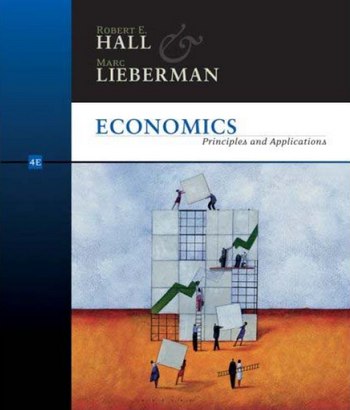
Economics: Principles and Applications, 4 edt.


Economics: Principles and Applications, 4 edt.
by Robert E. Hall, Marc Lieberman
South-Western College | English | 2009 | ISBN-10: 0324421451 | 528 pages | PDF | 82.1 MB

Because issues of policy and real applications are critical to the principles of economics course, acclaimed economists Hall and Lieberman have made the latest edition of their cutting-edge text as current as today's headlines, giving students a real-world, up-to-the-minute overview that presents economics as a unified discipline. Taking a no-nonsense, policy approach to economic theory and application, this comprehensive text is very accessible, equipping readers with a solid foundation in economics that they can build upon wherever their career paths may lead. A wealth of interactive online exercises, graphing applications, and research opportunities give students hands-on experience working with current economic issues. Hall and Lieberman's careful focus on core theoretical ideas and systematic application of theoretical tools to timely, practical questions conveys the message that economics is an integrated, powerful body of knowledge that can effectively address domestic and global issues.

Robert E. Hall is a prominent applied economist. He is the Robert and Carole McNeil Joint Professor of Economics at Stanford University and Senior Fellow at Stanford's Hoover Institution, where he conducts research on inflation, unemployment, taxation, monetary policy, and the economics of high technology. He received his Ph.D. from MIT and has taught there as well as at the University of California, Berkeley. He is the President of the American Economic Association for the year 2010. He is also director of the research program on Economic Fluctuations of the National Bureau of Economic Research, and Chairman of the Bureau's Committee on Business Cycle Dating, which maintains the chronology of the U.S. business cycle. He has published numerous monographs and articles in scholarly journals, and coauthored a popular intermediate text. Hall has advised the Treasury Department and the Federal Reserve Board on national economic policy, and has testified on numerous occasions before congressional committees.

Marc Lieberman is Clinical Professor of Economics at New York University. He received his Ph.D. from Princeton University. Lieberman has presented his extremely popular Principles of Economics course at Harvard, Vassar, the University of California at Santa Cruz, and the University of Hawaii, as well as at NYU. He has twice won NYU's Golden Dozen teaching award, and also the Economics Society Award for Excellence in Teaching. He is coeditor and contributor to The Road to Capitalism: Economic Transformation in Eastern Europe and the Former Soviet Union. Lieberman has consulted for the Bank of America and the Educational Testing Service. In his spare time, he is a professional screenwriter, and teaches screenwriting at NYU's School of Continuing and Professional Studies.

Download from:
filesonic.com
depositfiles.com

3% Recovery. No password

High Speed Download

Saturday, 21 May 2011

Principles of Environmental Economics: Economics, Ecology and Public Policy


Principles of Environmental Economics: Economics, Ecology and Public Policy
384 pages | Routledge; 2 edition (April 9, 2004) | 0415275601 | PDF | 2 Mb
This popular textbook returns in a fully revised and updated new edition. The first edition was the first introductory textbook in environmental economics that truly attempted to integrate economics with not only the environment but also ecology. This new version builds and improves upon the popular formula with new examples, new pedagogical features and new questions for discussion.
With the US refusing to ratify the Kyoto agreement, Environmental Economics is as important now as it has ever been. With international case studies and examples, this book will prove an excellent choice for introducing both students and other academics to the world of environmental economics.


High Speed Download

Handbook of Health Economics, Volume 1A


Handbook of Health Economics, Volume 1A By A.J. Culyer, J.P. Newhouse
Publisher: Nor th Hol land 2000 | 1000 Pages | ISBN: 0444504702 | PDF | 7 MB


The Handbook of Health Economics provide an up-to-date survey of the burgeoning literature in health economics. As a relatively recent subdiscipline of economics, health economics has been remarkably successful. It has made or stimulated numerous contributions to various areas of the main discipline: the theory of human capital; the economics of insurance; principal-agent theory; asymmetric information; econometrics; the theory of incomplete markets; and the foundations of welfare economics, among others. Perhaps it has had an even greater effect outside the field of economics, introducing terms such as opportunity cost, elasticity, the margin, and the production function into medical parlance. Indeed, health economists are likely to be as heavily cited in the clinical as in the economics literature. Partly because of the large share of public resources that health care commands in almost every developed country, health policy is often a contentious and visible issue; elections have sometimes turned on issues of health policy. Showing the versatility of economic theory, health economics and health economists have usually been part of policy debates, despite the vast differences in medical care institutions across countries. The publication of the first Handbook of Health Economics marks another step in the evolution of health economics.


Some video tutorials in one folder is here!!!


!!!No Mirrors below, please! Follow Rules!


High Speed Download

Friday, 20 May 2011

Introducing Economics: A Critical Guide for Teaching


Mark H. Maier, Julie A. Nelson "Introducing Economics: A Critical Guide for Teaching"
M.E. Sharpe | English | 2007-06-30 | ISBN: 0765616750 | 229 pages | PDF | 2 MB

Make economics resonate to high school students. This practical handbook will help economics and social studies teachers foster critical thinking by introducing students to the real-life dimensions of the major controversies in contemporary economics. Filled with useful teaching tips and user-friendly information on finding engaging materials and activities for the classroom, the book also includes detailed coverage of the Voluntary National Content Standards for economics. "Introducing Economics" is a one-stop resource for high school teachers who want to make economics relevant to their students' lives. It includes more than 50 sections with lists of suggested "Activities and Resources," many with Internet links. It features boxed "Hints for Clear Teaching" tips for presenting particularly difficult topics. It provides an annotated resource guide to more than 30 organizations involved in economics education, with associated Internet links. It follows the flow of topics in a typical economics course. It addresses real-life topics that are ignored or glossed-over in traditional textbooks - economics and the environment, the distribution of income and wealth, discrimination, labor unions, globalization, the power of corporations, and more. It offers critical guidance for meeting all 20 Voluntary National Content Standards in economics, and also provides an overview of the political and intellectual history and contemporary state of economics education.


Download links:


NO MIRRORS according to the rules


High Speed Download

Thursday, 12 May 2011

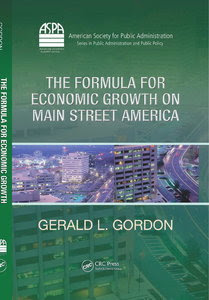
The Formula for Economic Growth on Main Street America


The Formula for Economic Growth on Main Street America (Public Administration and Public Policy) By Gerald L. Gordon
Publisher: CRC 2009-07-29 | 186 Pages | ISBN: 1420093894 | PDF | 1.7 MB

The community that establishes and maintains a solid economic framework greatly improves its chances of sustaining itself through fluctuations in the economy. The question is, of course, how can city officials and administrators make this happen? The Formula for Economic Growth on Main Street America examines why economic growth during the late twentieth century was marked by the dramatic rise of some communities and the equally stunning demise of others. This book identifies the key components of sustained economic growth as well as the policies, actions, and inactions that are precursors to the decline of local economies.

Based on the author’s 25 years of experience as president of one of America’s foremost economic development agencies, and his involvement in assisting communities around the world, the book shows how to assess the needs of communities and details what is needed to put plans in place. Drawing on case studies, the book illustrates lessons learned and how they can be applied, including:

What steps elected and administrative officials can take to stabilize and enhance the growth of their cities

Why the growth of some communities within a single regional marketplace can dramatically outpace that of neighbors possessing similar locations and assets

How communities can establish programs that sustain economic growth and provide jobs—without raising taxes

As communities struggle to cope with diminished tax revenues, the idea of achieving sustainable growth without raising taxes seems too good to be true. Tapping into the same strategies that allowed Fairfax County, Virginia, to enjoy triple-digit job growth while reducing property taxes, Dr. Gerald Gordon provides the framework and strategies to weather most economic storms and chart a course toward sustainable economic development.


DoWnLoAd FiLe

mirror

mirror


>>:: NO PASSWORD ::<<


>>::..::!!!NO MIRRORS!!!::..::<<


High Speed Download

Wednesday, 27 April 2011

Human Well-Being and Economic Goals (Frontier Issues in Economic Thought)


Frank Ackerman, David Kiron, Neva R. Goodwin, Jonathan Harris, Kevin Gallagher, Kenneth Arrow, "Human Well-Being and Economic Goals (Frontier Issues in Economic Thought)"
Publisher: Island Press; 1 edition | 1997-11-01 | 461 Pages | ISBN: 1559635606 | PDF | 2.97 MB

What are the ends of economic activity? According to neoclassical theory, efficient interaction of the profit-maximizing "ideal producer" and the utility-maximizing "ideal consumer" will eventually lead to some sort of social optimum. But is that social optimum the same as human well-being? Human Well-Being and Economic Goals addresses that issue, considering such questions as:

* Does the maximization of individual welfare really lead to social welfare?
* How can we deal with questions of relative welfare and of equity?
* How do we define, or at least understand, individual and social welfare?
* And how can these things be measured, or even assessed?

Human Well-Being and Economic Goals brings together more than 75 concise summaries of the most significant literature in the field that consider issues of present and future individual and social welfare, national development, consumption, and equity. Like its predecessors in the Frontier Issues in Economic Thought series, it takes a multidisciplinary approach to economic concerns, examining their sociological, philosophical, and psychological aspects and implications as well as their economic underpinnings.

Human Well-Being and Economic Goals provides a powerful introduction to the current and historical writings that examine the concept of human well-being in ways that can help us to set goals for economic activity and judge its success. It is a valuable summary and overview for students, economists, and social scientists concerned with these issues.


Download FREE

NO PASSWORD !!!

download file

mirror


NO MIRRORS please !!!


Please appreciate my work, download from my references!!!


High Speed Download

The Formula for Economic Growth on Main Street America


The Formula for Economic Growth on Main Street America (Public Administration and Public Policy) By Gerald L. Gordon
Publisher: CRC 2009-07-29 | 186 Pages | ISBN: 1420093894 | PDF | 1.7 MB

The community that establishes and maintains a solid economic framework greatly improves its chances of sustaining itself through fluctuations in the economy. The question is, of course, how can city officials and administrators make this happen? The Formula for Economic Growth on Main Street America examines why economic growth during the late twentieth century was marked by the dramatic rise of some communities and the equally stunning demise of others. This book identifies the key components of sustained economic growth as well as the policies, actions, and inactions that are precursors to the decline of local economies.

Based on the author’s 25 years of experience as president of one of America’s foremost economic development agencies, and his involvement in assisting communities around the world, the book shows how to assess the needs of communities and details what is needed to put plans in place. Drawing on case studies, the book illustrates lessons learned and how they can be applied, including:

What steps elected and administrative officials can take to stabilize and enhance the growth of their cities

Why the growth of some communities within a single regional marketplace can dramatically outpace that of neighbors possessing similar locations and assets

How communities can establish programs that sustain economic growth and provide jobs—without raising taxes

As communities struggle to cope with diminished tax revenues, the idea of achieving sustainable growth without raising taxes seems too good to be true. Tapping into the same strategies that allowed Fairfax County, Virginia, to enjoy triple-digit job growth while reducing property taxes, Dr. Gerald Gordon provides the framework and strategies to weather most economic storms and chart a course toward sustainable economic development.


DoWnLoAd FiLe

mirror

mirror


>>:: NO PASSWORD ::<<


>>::..::!!!NO MIRRORS!!!::..::<<


High Speed Download

Economic and Social History of Medieval Europe


Henri Pirenne, "Economic and Social History of Medieval Europe"
Harcourt, Brace and Company | 1937 | ISBN: 0156275333, 0415377935, 1150744707, B0006ANV2I | 243 pages | PDF | 7,8 MB

A great Belgian historian recounts the economic and social evolution of Western Europe from the end of the Roman Empire to the mid-fifteenth century. Translated by I. E. Clegg.


Summary: Impressive work!
Rating: 5

Pirenne's book first appeared in print in 1933, so I have to admit I was a little leery about reading it even though I have an interest in feudal economics. I was concerned that it would be a stuffy tome that was written in a dense and archaic academic style. To my surprise, this book is an extraordinarily good read, most interesting, and very informative. And unlike many books on this subject, a casual reader can be assured that a master's level background on the subject is not necessary to read this book.

Picking up at the end of the Roman Empire and running through approximately the middle 1500s, Pirenne tackles the full spectrum of economic and sociological issues as they evolved throughout the Middle Ages in Europe. Specifically, he relates how commerce was revived after the break-up of the economic and cultural stability that existed in the ancient world. Concepts such as the re-issuance of a currency, the rebirth of a money economy, rediscovery of credit, and how urban industry developed are covered and explained in detail. This is a very complete picture of economic and sociological circumstances that existed during the middle ages, as you are likely to see.

Pirenne takes the reader on a journey that attempts to plug the Medieval Period knowledge gap with a detailed explanation of economic development. Geographically (and culturally) he is able to discuss developments throughout all of Europe, from the Mediterranean to the North Sea. If you are interested in learning more about conditions in Europe during the Middle Ages and want a fuller understand of how the western economic system developed, pick up this book


Summary: Masterful explanation of Economics during the Middle Ages
Rating: 4

Pirenne's book first appeared in print in 1933, so I have to admit I was a little leery about reading it even though I have an interest in feudal economics. I was concerned that it would be a stuffy tome that was written in a dense and archaic academic style. To my surprise, this book is an extraordinarily good read, most interesting, and very informative. And unlike many books on this subject, a casual reader can be assured that a master's level background on the subject is not necessary to read this book.

Picking up at the end of the Roman Empire and running through approximately the middle 1500s, Pirenne tackles the full spectrum of economic and sociological issues as they evolved throughout the Middle Ages in Europe. Specifically, he relates how commerce was revived after the break-up of the economic and cultural stability that existed in the ancient world. Concepts such as the re-issuance of a currency, the rebirth of a money economy, rediscovery of credit, and how urban industry developed are covered and explained in detail. This is a very complete picture of economic and sociological circumstances that existed during the middle ages as you are likely to see.

Pirenne takes the reader on a journey that attempts to plug the Medieval Period knowledge gap with a detailed explanation of economic development. Geographically (and culturally) he is able to discuss developments throughout all of Europe, from the Mediterranean to the North Sea. If you are interested in learning more about conditions in Europe during the Middle Ages and want a fuller understand of how the western economic system developed, pick up this book


Download


Not all books on AvaxHome appear on the homepage.
In order not to miss many of them follow ebooks section (see top of each page on AH)
and visit my blog too :)


High Speed Download

The Secrets of Economic Indicators: Hidden Clues to Future Economic Trends and Investment Opportunities, 2nd Edition


Bernard Baumohl "The Secrets of Economic Indicators: Hidden Clues to Future Economic Trends and Investment Opportunities, 2nd Edition"
Publisher: Wharton School Publishing; 2nd edition (August 3, 2007) | 432 Pages | ISBN: 0132447290 | PDF | 12.6 MB

From The Wall Street Journal, November 22, 2005: "Whether you're tracking pop culture, high fashion or health care, all things are connected, and economics is the tie that binds them all. For those who need to know more about economic trends and for those who haven't the skills or background in the field, Mr. Baumohl's book is the real deal. He miraculously breathes life into economic indicators and statistics." From Library Journal: "Baumohl, a former economics reporter for Time magazine, has written a tremendously useful source on economic indicators. Baumohl considers a variety of factors when describing each indicator, such as what exactly it measures, how it is computed, where to find the relevant report on the web, the day and time this report is released, the source of the information, and how often the information is revised. He also discusses the market impact of these indicators on bonds, stocks, and currency. Bottom Line: Although this book is marketed as a tool for investors and is not organized like a typical reference book, it belongs in the reference collection because it explains so clearly what the various economic indicators are and how to locate data about them. Recommended for all libraries. " -Stacey Marien, American Univ. Lib., Washington, DC --This text refers to the Hardcover edition.


Download

mirror

mirror


NO PASSWORD


No Mirror(s) Please !!!


High Speed Download

Foreign Aid, War, and Economic Development: South Vietnam, 1955-1975


Douglas C. Dacy, "Foreign Aid, War, and Economic Development: South Vietnam, 1955-1975"
Cambridge University Press | ISBN: 0521021316 | October 20, 2005 | 324 pages | PDF | 6.9 MB
Foreign Aid, War, and Economic Development traces the economic history of South Vietnam from 1955 to 1975. During this period encompassing the Vietnam war, high-level officials paid relatively little attention to the economy of South Vietnam even though economic development was a necessary condition for the country's survival. A generous foreign aid program was designed to pay local troops and improve the standard of living of the population. Professor Dacy documents this growth in national income and the progress or lack thereof in a number of development indicators. He discusses the goals of United States economic aid and measures the net resources transferred. Additionally, the book analyzes wartime inflation and the Vietnamese tax system, and in so doing shows that the measures which would have promoted long-run viability were shunned in favor of short-run expediencies that practically doomed the country in the long run. Finally, economic development in South Vietnam is compared to that in Israel, South Korea, and Taiwan, three nations that faced high military threats during the same period.


High Speed Download

International Economic Integration in Historical Perspective (Routledge Explorations in Economic History)


International Economic Integration in Historical Perspective (Routledge Explorations in Economic History)
Routledge | ISBN: 0415770270 | 2006-06-23 | PDF | 254 pages | 2 Mb

International economic integration is perceived as one of the paramount forces shaping the modern world. Many organizations, both public and private, are trying to combine economic activities across international borders. The European Union and the North American Free Trade Area are two examples of government-managed international economic integration. Private organizations include various criminal groups as well as international churches.

International economic integration is not a recent phenomenon; its roots can be traced back to the Roman Empire. International Economic Integration in Historical Perspective departs from the conventional short-term analysis and takes a long-term view of the process, offering perspectives that are both detailed and diverse. Dennis M. P. McCarthy examines seven types of organizations that exemplify international economic integration, such as colonial empires, merchant associations, religious empires, criminal empires, free trade areas, customs unions and common markets. Representative examples of each type are analyzed in a comparative framework. An introduction defines key terms and concepts; a retrospective summarizes the main insights that emerge from the book. Endnotes and a detailed bibliography offer readers ways to pursue topics further.

This timely and unique book demonstrates that international economic integration is an economic and political process that also involves political economy. International Economic Integration in Historical Perspective will prove indispensable to students and general readers who wish to gain a firm understanding of international economics and the processes that shape the world today.


High Speed Download

East Asia's Economic Integration: Progress and Benefit


East Asia's Economic Integration: Progress and Benefit By Daisuke Hiratsuka
Publisher: Palgrave Macmillan | ISBN: 0230553621 | edition 2008 | PDF | 264 pages | 1,3 mb

This book discusses concerns arising from economic integration in East Asia, where de facto economic integration has advanced in recent years.It offers an analysis of the direction of economic integration in East Asia, and where it should be heading. It contains new international trade theory, spatial economics, data-work empirical studies, and field studies on various scenarios of de jure economic integration. It is accessible for readers seeking to understand the current state of economic integration in East Asia, possible future directions, and the impacts of integration on member/non-member states.This book explores the current state and direction of economic integration in East Asia, including the proliferation of FTAs, and examines how economic integration can allow each economy to benefit equally.

To thank me use this links!

DoWnLoAd FiLe

mirror

mirror

Download many interesting free eBooks HERE

!!! No mirrors please !!!

High Speed Download

Wednesday, 20 April 2011

Health: A Vital Investment for Economic Development in Eastern Europe and Central Asia


Health: A Vital Investment for Economic Development in Eastern Europe and Central Asia
Publisher: European Observatory | ISBN: 9289072822 | edition 2002 | PDF | 249 pages | 2,12 mb

The breakdown of the socialist system in the late 20th century gave some of the affected countries the opportunity to establish the prerequisites for sustainable economic development and improved human welfare. However, for others, the dramatic economic decline experienced during the transition years resulted in widespread poverty. Despite some improvement since then, over 60 million people remain poor and more than 150 million are economically vulnerable in the countries of central and eastern Europe and the Commonwealth of Independent States (CEE-CIS). This report is the first comprehensive effort to analyse the economic impact of ill health in the CEE-CIS Region, and much of the evidence it presents about the economic implications of chronic disease - growing rapidly in many low- and middle-income countries - is also relevant beyond the original geographical focus. Health: a vital investment for economic development in eastern Europe and central Asia explores the interdependence of health and economic development, focusing on the Region's significant economic burden of ill health. It also, simultaneously, advocates evidence-based, cost-effective interventions and strategic decisions at the national and international levels as a crucial means to achieving sustained economic growth and poverty reduction in the Region. The authors: Marc Suhrcke is an economist in the WHO Regional Office for Europe in Venice, Italy. Lorenzo Rocco is Assistant Professor of Economics at the University of Padova, Italy. Martin McKee is Professor of European Public Health at the London School of Hygiene & Tropical Medicine, and Research Director at the European Observatory on Health Systems and Policies.

To thank me use this links!

uploading.com

depositfiles.com

If you can't, use this link!

megaupload.com

!!! No mirrors please !!!


High Speed Download

The Economic Growth Engine: How Energy and Work Drive Material Prosperity


Robert U. Ayres, Benjamin Warr, "The Economic Growth Engine: How Energy and Work Drive Material Prosperity"
Edward Elgar Publishing | 2009 | ISBN: 1848441827 | 411 pages | PDF | 12,7 MB

`Would you want your great-children in 2100AD to have a 22nd-century industrial economy? If so, read this book to grasp how strongly wealth depends on energy and its efficient use. Start treating fossil energy, not as continuing income, but as one-time energy capital to spend on efficiency and long-term sustainable energy production. Otherwise, your descendants will inherit a broken 20th-century economy that only worked with cheap fossil fuels. They will not be rich and they will wonder what their ancestors were thinking.'
- John R. Mashey, PhD, Silicon Graphics

`Current economic theory attributes most income growth to technical progress. However, since technical progress can neither be defined nor measured, no one really knows what policies will encourage income growth. Ayres and Warr show that access to useful work, which can be defined and measured, explain the bulk of post-1900 income changes in Japan, Britain and the USA. They see rising real prices for fossil fuel and stagnating efficiencies of converting raw energy into useful work as a threat to continued income growth. This brilliant and original work has profound policy implications for future income growth without significant improvements in energy conversion efficiency.'
- Thomas Casten, Recycled Energy Development LLC

`Following the up-and-down energy shock of 2008, Ayres and Warr offer a unique analysis critical to our economic future. They argue that "useful work" produced by energy and energy services is far more important to overall GDP growth than conventional economic theory assumes. Their new theory, based on extensive empirical and theoretical analysis, has important implications for economists, businessmen and policymakers - for anybody concerned with our economic future. Ayres and Warr argue persuasively that economic growth is not only endogenous but has been driven for the past two centuries largely by the declining effective cost of energy. If their new theory is correct, the inevitable future rise of the real cost of energy (beyond the $147 oil price peak in July 2008), could halt economic growth in the US and other advanced countries unless we dramatically improve energy with technology.'
- J. Paul Horne, independent international market economist

`This book addresses a very important topic, namely economic growth analysis from the angle of energy and material flows. The treatment is well balanced in terms of research and interpretation of the broader literature. The book not only contains a variety of empirical indicators, statistical analyses and insights, but also offers an unusually complete and pluralistic view on theorizing about economic growth and technological change. This results in a number of refreshing perspectives on known ideas and literatures. The text is so attractively written that I found it very difficult to stop reading. All in all, this is a very original and important contribution to the everlasting debate on growth versus environment.'
- Jeroen C.J.M. van den Bergh, University of Barcelona, Spain and Free University, Amsterdam, The Netherlands

The historic link between output (GDP) growth and employment has weakened. Since there is no quantitively verifiable economic theory to explain past growth, this unique book explores the fundamental relationship between thermodynamics (physical work) and economics.

The authors take a realistic approach to explaining the relationship between technological progress, thermodynamic efficiency and economic growth. Their findings are a step toward the integration of neo-classical and evolutionary perspectives on endogenous economic growth, concluding in a fundamental explanation of endogenous growth that is both quantifiable and consistent with the laws of thermodynamics. For two centuries fossil and other sources of energy (work) have been replacing human and animal muscles. Now our civilization is truly addicted to fossil energy availability at ever low prices. Can increasing efficiency compensate for coming scarcity? This is the crucial question. The most important implication of this is that future economic growth is not guaranteed because the efficiency gains that have driven growth in the past may not continue in the future.

Exploring the theory of growth with an emphasis on the role of energy, useful work and technological change, this book will be of great interest to academics and students focussing on growth theory, energy and ecological economics. It will also prove insightful to those concerned with policy making or responding to changes in policy related to the energy-growth nexus.


Not all books on AvaxHome appear on the homepage.
In order not to miss many of them follow ebooks section (see top of each page on AH)
and visit my blog too :)

NO MIRRORS according to the rules


High Speed Download

Courting Social Justice. Judicial Enforcement of Social and Economic Rights in the Developing World


Varun Gauri, Daniel M. Brinks. "Courting Social Justice. Judicial Enforcement of Social and Economic Rights in the Developing World"
Cambridge University Press | 2008 | ISBN: 0521145163 | 384 pages | PDF | 5 Mb

This book is a first-of-its-kind, five-country empirical study of the causes and consequences of social and economic rights litigation.

The book develops new methodologies for analyzing the sources of and variation in social and economic rights litigation, explains why actors are now turning to the courts to enforce social and economic rights, measures the aggregate impact of litigation in each country, and assesses the relevance of the empirical findings for legal theory.


• This book is a first-of-its-kind, five-country empirical study of the causes and effects of social and economic rights litigation
• The research strategy is a structured comparison of five countries: Brazil, India, Indonesia, Nigeria, and South Africa
• The book develops new methodologies for analyzing the sources of and variation in social and economic rights litigation

Contents

1. Introduction: the elements of legalization, and the triangular shape of social and economic rights Varun Gauri and Daniel M. Brinks
2. Litigating for social justice in post-apartheid South Africa: a focus on health and education Jonathan Berger
3. Accountability for social and economic rights in Brazil Florian F. Hoffmann and Fernando R. N. M. Bentes
4. Courts and socio-economic rights in India Shylashri Shankar and Pratap Bhanu Mehta
5. The impact of economic and social rights in Nigeria: an assessment of the legal framework for implementing education and health as human rights Chidi Anselm Odinkalu
6. The implementation of the rights to health care and education in Indonesia Bivitri Susanti
7. A new policy landscape: legalizing social and economic rights in the developing world Helen Hershkoff
8. Transforming legal theory in the light of practice: the judicial application of social and economic rights to private orderings Daniel M. Brinks and Varun Gauri.

Transferred to digital printing 2008. Online Publication - November 2009


High Speed Download

Building Prosperity: Housing and Economic Development


Anna Kajumulo Tibaijuka, Ban Ki-moo, "Building Prosperity: Housing and Economic Development"
Earthscan Publications Ltd | 2009 | ISBN: 1844076326 | 288 pages | PDF | 1,1 MB

The world’s urban population is growing by 100,000 households a day, presenting an enormous challenge, above all in developing countries. It is also an opportunity, as investment in housing and the provision of shelter is potentially one of the most effective drivers of economic growth and sustainable national development. In recent debates, however, its economic significance and role as an instrument of social policy have been overlooked. This book is a much-needed account, with numerous detailed examples, of the role of housing in economic growth and development by an author in a unique position to understand its importance and the practical measures for delivering that growth.

The book analyzes the relationships between housing and economic development. Housing as an engine of economic growth plays a central role at local (city), national and global levels. While the linkages between housing and the macroeconomic environment in developed countries has been studied, very little is known in the case of developing and transitional countries where the author establishes these linkages with great clarity, supported by detailed case studies. On the basis of this analysis, it goes on to develop specific policies and practices to enable governments to enhance the contribution of housing in economic growth.

The argument of the book follows a logical structure: starting from a comprehensive conceptual framework for understanding housing and economic development (chapter 2), it assesses the contribution of housing to economic development (chapter 3), explores the importance of housing finance in development (chapter 4), examines the importance of housing as a social policy instrument (chapter 5), critically analyzes the dynamic factors shaping the economic significance of housing (chapter 6), and finally presents key lessons on housing and economic development as well as policy recommendation to enhance the role of housing as a source of economic development (chapter 7). Its frame of reference in analyzing the housing and economic development nexus is global, drawing on cases studies chosen to reflect regional diversity as well as differences in socio-economic development and political systems.


Not all books on AvaxHome appear on the homepage.
In order not to miss many of them follow ebooks section (see top of each page on AH)
and visit my blog too :)

NO MIRRORS according to the rules


High Speed Download

Crunch: Why Do I Feel So Squeezed? (And Other Unsolved Economic Mysteries)


Jared Bernstein, "Crunch: Why Do I Feel So Squeezed? (And Other Unsolved Economic Mysteries)"
Berrett-Koehler Publishers | 2008 | ISBN: 1576754774 | 225 pages | PDF | 1,2 MB

Is Social Security really going bust, and what does that mean to me? If I hire an immigrant, am I hurting a native-born worker? How much can presidents really affect economic outcomes? Why does the stock market go up when employment declines? What's a "living wage?" Why do I feel so squeezed?

If you'd like to know the answers to these questions, premier economist Jared Bernstein is here to help. In Crunch he answers these as well as dozens of others he has fielded from working Americans by email, on blogs, and at events where he speaks. Chances are if there's a stumper you've always wanted to ask an economist, it's solved in this book.


Summary: Economic analysis for everyone
Rating: 5

This is a fantastic book. It is written for a layperson audience - an aim towards which it is extremely successful. The aim of the book is for the author to provide answers, and accessible analysis, to common socioeconomic questions of typical American citizens. For example, how to fix the health-care system and social security; how to explain the salaries of CEOs; why inequality in America increased; why minimum wage does not necessarily hurt the macroeconomy; why so many Americans feel financially and economically "squeezed" in their daily lives. There are also several more esoteric topics, such as the Federal Reserve System, the living wage, budget deficits, etc.

There are roughly 50 plus short articles, typically of two to six pages. The book is divided into five chapters. The book can easily be used as a type of reference for various economic issues and topics. Readers should be warned that Bernstein's economic analysis is not always conventional, nor necessarily widely shared by most economists, or found in typical economic textbooks. His approach is purposefully traditional with respect to the consideration of "opportunity costs" and trade-offs of various economic policies. He is also traditionally in his emphasis toward the importance of economic statistics. He is less traditional in that he believes that economics is not purely scientific, but substantially normative and political.

Politically Bernstein makes quite clear he supports a progressive agenda. This is most clear in chapter 5 where he articulates a political agenda toward American working families, income inequality, health-care, immigration, education, and globalization. The book emphasizes in the early pages that he has a "political economist" orientation toward social analysis. This means he believes power (especially political power, economic wealth, and socio-cultural prejudices) makes a difference in the competitive outcomes of economic activity. Surely this will turn off many potential readers. At the same time it is a great strength of Bernstein's book that he has provided very simply, clear, and short political economy analyses of everyday socioeconomic phenomena. Too often political economists spend far too much time trying to explain methodological and philosophical differences between their approach and neo-classical, i.e. mainstream, textbook analysis. Bernstein cuts to the chase. In this sense, Bernstein's book is a great contrastive complement to a mainstream principle economic textbook.

Bernstein's book provides many alternative analyses, which should deepen our understanding of social phenomena; not because Bernstein always has it right, but because his book forces the reader to think more deeply about social problems in a contrastive way to mainstream economic models such as supply and demand. He is always attempting to explain real statistics and data that confront us. When mainstream theory proves inadequate Bernstein does not hesitate to consider political power, wealth, and cultural prejudices as part of the explanation.

Bernstein's approach is highly inductive, very much in the tradition of the American institutionalist tradition of economists. Many readers will find this highly refreshing, especially if they received a dogmatically deductive approach in their economic classroom experience. Bernstein deals with the real world and real world problems.

Bernstein is the codirector of research at the Economic Policy Institute and coauthor of the biannual publication of "The State of Working America". "The State of Working America" is a wealth of socioeconomic data. Although this biannual book provides some of the best and most interesting statistics on American households and for national trends, it is not necessarily reader friendly. "Crunch" offers non-statistical access to the basic data "The State of Working America" complies. This is a most important contribution.

In "Crunch" Bernstein's encyclopedic knowledge of socioeconomic statistics and trends has met and informed a great populist writer. This book deserves a wide audience and careful scrutiny of his claims and analysis.


Not all books on AvaxHome appear on the homepage.
In order not to miss many of them follow ebooks section (see top of each page on AH)
and visit my blog too :)

NO MIRRORS according to the rules


High Speed Download

Twitter Delicious Facebook Digg Stumbleupon Favorites More